
The Federal Electronic Health Record (EHR) is the government’s long-overdue effort to move it’s VA healthcare data out of the 1980s and into the modern world. Built on the Oracle/Cerner platform, the system was intended to be more efficient, reduce errors, eliminate workflow bottlenecks, and improve continuity of care by allowing records to follow patients across the VA, the Department of Defense, community providers and pharmacies. The ultimate goal is a single, lifelong health record that travels with service members from enlistment through veteran status.
“In 2019 the VA estimated it would cost about $16 billion and take 10 years to launch across all hospitals and clinics. In 2022, the Institute for Defense Analyses estimated it would cost nearly $33 billion over 13 years.”
No big tech project comes without a few face-plants, and the early VA rollouts were no exception. Workflow headaches, training gaps, and system struggles quickly made it clear this wasn’t a plug-and-play situation. That reality check finally led to a pause… followed by self-assigned time-out as a “reset.” Going forward, the focus is on slower, smarter launches with real preparation and fewer curveballs—so care stays front and center. It deserves to be acknowledged, not as criticism but as reality, that the initial go-live experienced failures at a level that cannot be minimized. When it comes to medical treatment and healthcare, small breakdowns can quickly become catastrophic, underscoring how high the stakes truly are.
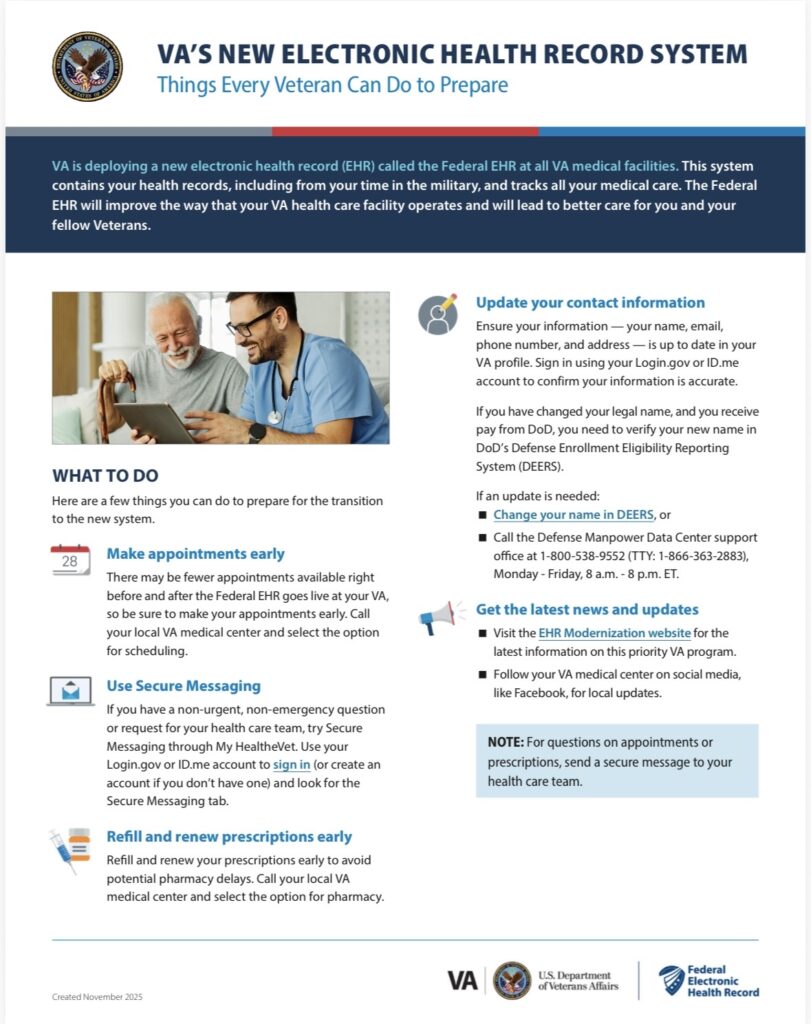
As the VA transitions to the new Electronic Health Record system, veterans are encouraged to take a few simple steps to help safeguard their information ahead of go-live. This includes downloading or saving copies of medical records through My HealtheVet, reviewing medications and diagnoses for accuracy, and confirming contact information is up to date. Veterans should also keep a personal list of current providers, upcoming appointments, and active prescriptions. Having this information on hand can help prevent delays, correct errors quickly, and ensure continuity of care during the transition. Refer to VA fact-sheet for more information.
Final thoughts…
The upcoming Federal EHR relaunch moves forward under the weight of lessons learned the hard way. The failures of earlier rollouts showed just how much is at stake when healthcare technology is rushed or underprepared. While changes have been promised and improvements outlined, confidence will ultimately be built through execution, not assurances. Veterans would be wise to stay informed, keep personal records, and speak up when something doesn’t look right. The hope is that this next phase reflects a more measured, accountable approach—one that finally puts patient safety and continuity of care ahead of timelines and talking points.
Leave a Reply